The portal of chemical risk
Choose the information that best suits your needs by selecting the categories of items from the lists below
Why does DIPHOTERINE® solution not contain phosphate?
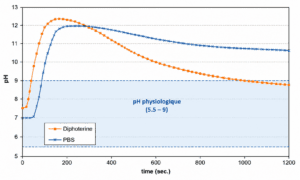
Whilst safe for the healthy eye, phosphate can cause calcification of the cornea when used on an injured eye. This risk, highlighted by several studies, is also recognised and documented by the European Medicines Agency (EMA), which emphasises that phosphate-based solutions for the healthy eye may pose a risk in the event of eye injury.
Learn more...Laboratory – Avoid tissue injuries
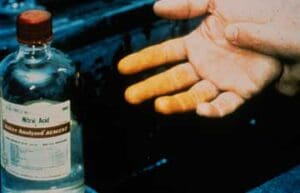
Tissue injury from contact with chemicals is preventable. Use of appropriate engineering and procedural controls and using personal protective equipment (“PPE”) properly is essential. Here are some ideas to help you prevent injuries.
Learn more...Vinyl acetate: Understanding the risk of specific chemicals of interest
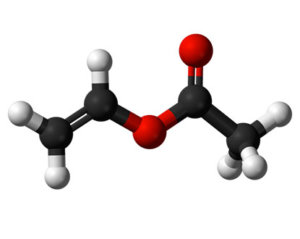
Vinyl acetate is an industrial chemical widely used in the production of polymers. It is a colorless liquid with a pleasant fruity odor. When exposed to visible light, it polymerizes into a transparent solid.
Learn more...Thioglycolic acid :Understanding the risk of specific chemicals of interest
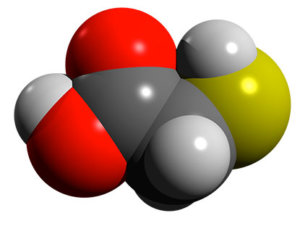
Thioglycolic acid may cause severe chemical burns and injuries upon contact with the skin, eyes, or the respiratory or digestive tracts. It is corrosive and may even result in systemic toxicity.
Learn more...Picric acid: Understanding specific chemicals hazard

Picric acid is a yellowish crystalline solid used as a high explosive and oxidant in rocket fuels, matches and leather processing.
Learn more...Crotonaldehyde : Focus on specific chemicals of interest
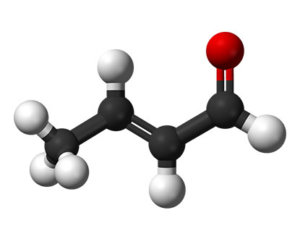
Crotonaldehyde is a colorless to white liquid with a suffocating odor that turns pale yellow upon exposure to air. It is irritating to the eyes, skin, and respiratory tract.
Learn more...Chemical risk in food industry

The food industry produces both finished products for consumption and intermediate products for further processing. It is diverse compared to many other industrial sectors. This diversity can be seen in terms of size and nature of the companies as well as the wide range of raw materials, products and processes. The food industry is subject to very diverse local economic, social and environmental conditions, and varying national legislations.
Learn more...Sugar industry: chemical exposure in sugar production

Following a crisis period between 2017 and 2020 due to a change in regulations, the European sugar market is currently experiencing significant growth of almost 50%. As a result, both the production and consumption of sugar are increasing. Sugar is a foodstuff used by individuals as well as by industries for production purposes. The latter represent a large part of the sugar industry's customer portfolio.
Learn more...Lime : Chemical risk and Prevention
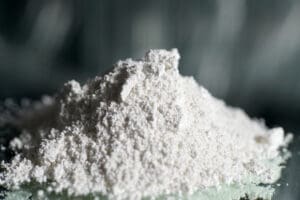
Lime — a white substance, generally in powder form, used across a wide range of industries. But what exactly is lime, and what hazards does it present?
Learn more...Exposure to chemical risks in the meat industry
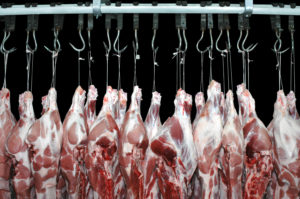
The meat industry comprises all of the agri-food industrial activities specialising in the processing of farm animals for human consumption. Slaughterhouses perform the second stage of livestock processing, i.e. slaughtering the animals and preparing the carcasses.
Learn more...Chemical risks in pharmaceutical industry
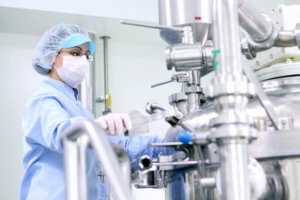
Pharmaceutical manufacturing is a complex process that involves the use of a wide range of chemicals, including solvents, reagents, and active ingredients. While these chemicals are essential for producing life-saving medications, they can also pose significant risks to workers if proper safety measures are not in place.
Learn more...Lithium-ion batteries: why and when do they pose a risk of chemical exposure for people?

In recent years, there has been an increase in the use of motorised personal mobility devices (MPMDs) equipped with a non-combustion engine such as scooters, bicycles, unicycles, hoverboards and similar devices. Like more and more electric vehicles, most MPMDs contain lithium-ion batteries, which are appreciated for their excellent longevity and energy storage efficiency.
Learn more...Chemical risk in wastewater treatment
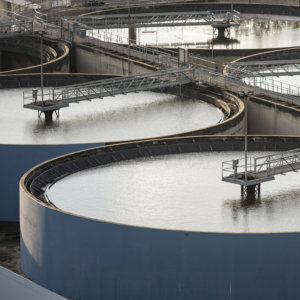
The water treatment is broken down into several stages, where personnel may be exposed to risks at any time, whether physical (risks of falling, slipping), biological (asphyxiation, poisoning by contaminated materials) or chemical (projections, inhalation).
Learn more...Chemical risks in detergents production

Detergents were developed in response to a shortage of animal and vegetable fats and oils during World War I and II.
Learn more...Chemical risks in petrochemical industry
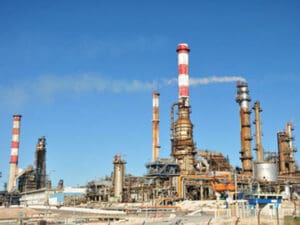
Petrochemistry is a science that can be applied to fundamental human needs, such as health, hygiene, housing and food. Petrochemicals are an essential part of the chemical industry today.
Learn more...The secrets of solvation

Why taking an interest in solvation? By better understanding the properties of solvents we can better control their engineering use and take the required or simply necessary prevention measures in the best possible way.
Learn more...The danger of hydrofluoric acid (HF)
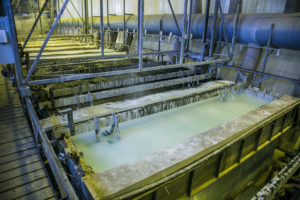
Hydrofluoric acid is a key chemical in many industries, particularly as a surface treatment agent (glass, metals, ceramics, etc.) or as a reaction additive. It is used in many fields of activity, from the production of photovoltaic cells to industrial maintenance in the food industry. Despite the dangers associated with its use, there are few or no substitute products or techniques. This is why its production is growing along with its global demand.
Learn more...The Occupational Health Nurse and risk assessment

Risk assessment for chemicals is a prerequisite to any risk prevention programme in general. It should lead to the construction of preventive actions plan in the Occupational Health Nurse’s project approach.
Learn more...Occupational Health Nurse (OHN) and chemicals

Since the creation of the Inter University Diploma Course « DIUST » in 1994 in France followed by a license in occupational health, legislation as well as the OHN's role keeps evolving.
Learn more...Cancer treatment and chemical hazards
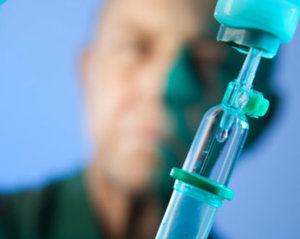
Chemotherapy is a method of chemically treating malignant tumors. Combinations of agents are administered to the patient in order to target the tumor and its metastases.
Learn more...Chemical risk at home: Hydro soluble unit-dose laundry pods

A warning on accidental exposure to hydro soluble unit dose laundry pods has been issued by the French Ministry for Health on June 17th 2014 to inform and give recommendations on this matter of public health.
Learn more...Chemical risk in plastic and rubber industry
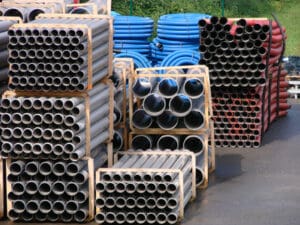
The production of plastic is now one of the largest industries. With products ranging from mobile phones to car bumpers, via syringes, plastic production is still increasing.
Learn more...CE Marking and classification of medical devices

CE marking and the classification of medical devices ensure the safety and compliance of products used in healthcare. This article explains the European regulations, device classes, and the importance of CE marking for the protection of patients and users.
Learn more...European Standard EN 15154 – Safety showers

The European standard EN 15154 sets the technical and safety requirements for emergency showers and eyewash units, whether connected to the water supply or not. This article outlines the principles, flow rates, water quality, and marking obligations to ensure user protection in the event of accidental exposure.
Learn more...Are we prepared?

The 21st century has already witnessed numerous technological advances, including the increase in information transmission speed, which makes it possible to identify events that have occurred on the other side of the world within seconds.
Learn more...Nitric acid, a danger lurking
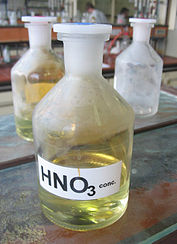
Nitric acid is a strong acid that attacks nearly all metals. It can be found in nature in the form of salts (nitrates) and has the chemical formula HNO₃.
Learn more...Chemical risks in chemical waste treatment
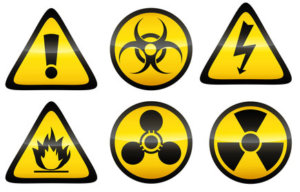
Waste are the result of the human activity and in particular its economic activities.
Learn more...Chemical risks in semiconductors industry

Semiconductos are essential to the good functioning of many modern appliances and are key products in the electronic systems.
Learn more...Chemical risks in mining industry
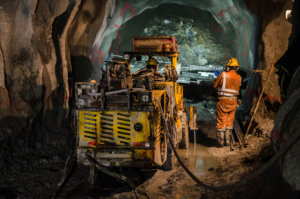
A mine is a site above or below which minerals (metallic or non-metallic) are extracted from natural deposits using various methods. This definition also includes the total land area on which such activities take place.
Learn more...Chemical risks in automotive industry
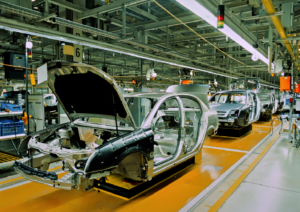
The automotive industry is a very wide area from the manufacturing of the pieces of the engine, the body, plastics to the assembly of the car. There is a chemical risk at each stage of production of a car.
Learn more...Chemical risks in emergency departments

Prevor’s decontamination solutions are dedicated to the industry sectors to be used according to the right protocol enabling victims not to have any chemical injuries following chemical accidents involving corrosives and/or irritants.
Learn more...Chemical risk in industrial subcontracting for the maintenance
Maintenance is devoted to keep the industry running in the best possible shape, making equipment reliable, productive, and secure to operate.
Learn more...The chemical risk in the paper industry
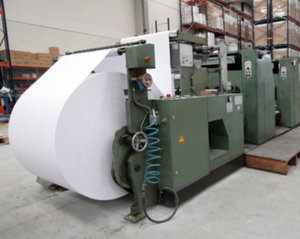
The interest of the paper industry market is first of all linked to the complex process required by the production of paper. Two distinct manufacturing operations can be set-up according to the quality of paper needed: mechanical process (mechanical pastes for newsprints and magazines) or chemical process (chemical pastes for writing, impression or packing: sulphite pastes and sulphate pastes or kraft) during which the wood fibres are insulated with chemicals such as bisulfites or sulphates.
Learn more...Chemical risk in solar energy

Photovoltaic refers to the direct conversion of solar radiance into electrical energy thanks to solar cells. Until now, solar cells are generally made of silicon (semiconductor).
Learn more...Chemical risk in in the aeronautics sector

From the construction of an aircraft to its business concern, there is a very large area. Chemicals are used from the manufacturing of pieces to the aircraft maintenance.
Learn more...Why speak about “chemical injury” rather than “chemical burn” ?

Although the informal language of many countries use the term of “burn” as well for thermal accidents as for chemical splashes, it would be judicious, as the German-speaking ones do it, to adopt different names.
Learn more...Chemical risk in metallurgy
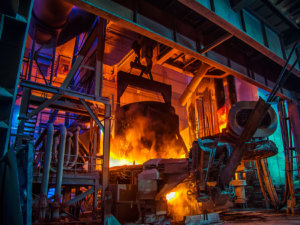
The metallurgical sector regularly uses numerous chemicals in its daily manufacturing processes: paints, solvents, resins, polyurethanes, oils, but primarily all agents used in surface treatments and cleaning operations. Given the wide variety of metals processed, these operations are diverse, leading to the presence of numerous substances and a significant chemical risk.
Learn more...Laboratory – Storage of chemicals
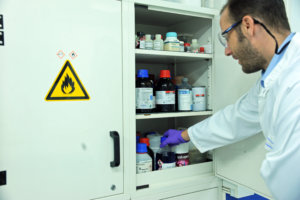
Storage of many different chemicals in a laboratory setting is done following a few simple rules: * Store by chemical compatibility * Use secondary containment
Learn more...