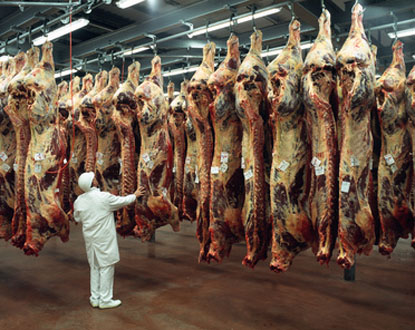
Chemical risk in food industry
This diversity can be illustrated in terms of the nature and size of companies, as well as the wide variety of raw materials, manufacturing processes and finished products. The agri-food industry is subject to numerous economic, social and environmental constraints, in addition to country-specific legislation.
Chemicals used
The stringent hygiene requirements of the agri-food industry directly result in a significant chemical risk. Indeed, in addition to certain manufacturing processes that require the use of numerous chemicals such as widely used separation techniques in this industrial sector (extraction, deionization, solubilization, etc.) cleaning operations represent the primary source of risk.
Maintenance
Maintenance teams are specifically exposed, as are operators performing maintenance tasks, who are often involved in accidents while checking valves or pipelines (leaks, bursts). Consumer safety is ensured through the regular cleaning and disinfection of installations. Just as with raw material processing such as milk skimming operations in dairies, during which hand contact with caustic soda is common cleaning operations in particular require the use of a wide range of chemical agents.
Originally, three specific products were primarily used:
- Chlorinated alkalis such as sodium hypochlorite (bleach)
- Caustic soda (in very large quantities)
- Nitric acid.
Many other products can be encountered today like peracetic acid or hydrogen peroxide . Formol is especially used in the poultry industry for the environmental disinfection by fumigation. This product, classified as carcinogenic , causes an important embarrassment for the people who arrive on the working place following the disinfection. It is thus more and more replaced by glutaraldehyde , whose potential chronic toxicity has not been detected until today. Other products can also be quoted, such as sulphuric acid (little used) or ammonia (as cooler in the meat industry for example). Foam guns, prepared with a solution of chlorinated alkaline (like sodium hypochlorite ) mixed with other additives (foaming products) are massively used for the washing of walls in slaughtering chains but are also met in the majority of industries of this sector (frequent operation, often daily and at least weekly). They are presented under the form of a small tank containing the solution, connected to a pipe, and allow to deliver a thick foam under a pressure ranging between 3 and 4 bars. Following the first washing, walls are first rinsed with water, then with nitric acid or peracetic acid before a last disinfection with glutaraldehyde or peracetic acid .The areas which cannot be reached by the jet must be cleaned with a sponge, which increases the risk of exposure. It is frequent to see operators increasing the amount of recommended product, thus modifying the concentration of the solution which then becomes corrosive. Even if the staff is equipped according to the risk associated with these operations, the face can be exposed as well as the other parts of the body when clothing is removed.
Risk of projection
Even when personnel are equipped according to the risks associated with these operations, the face and other parts of the body can still be exposed when clothing is removed. Furthermore, the frequent use of rain suits that are not designed for chemical protection and therefore not impermeable to the substances used can lead to severe chemical accidents.
The maintenance operations such as the stainless weldings are related to a specific risk. The passivation pastes containinghydrofluoric acid (HF) are systematically used, thus involving a requirement of the HEXAFLUORINE® solutionHF solutions can also be used during other operations dealing with the cleaning of all the stainless equipments. Lastly, the risk due to the use of HF is met during the preparation of mixtures with nitric acid and fluoride salts (such assodium bifluoride NaHF2 for example).
These industries have wastewater treatment plants where the presence of lime, sulfuric acid, or caustic soda is consistently detected. Finally, some analytical or research laboratories are also present on these sites, where the chemical risk is well known and clearly identified.