DIPHOTERINE® solution – emergency washing solution for chemical injuries
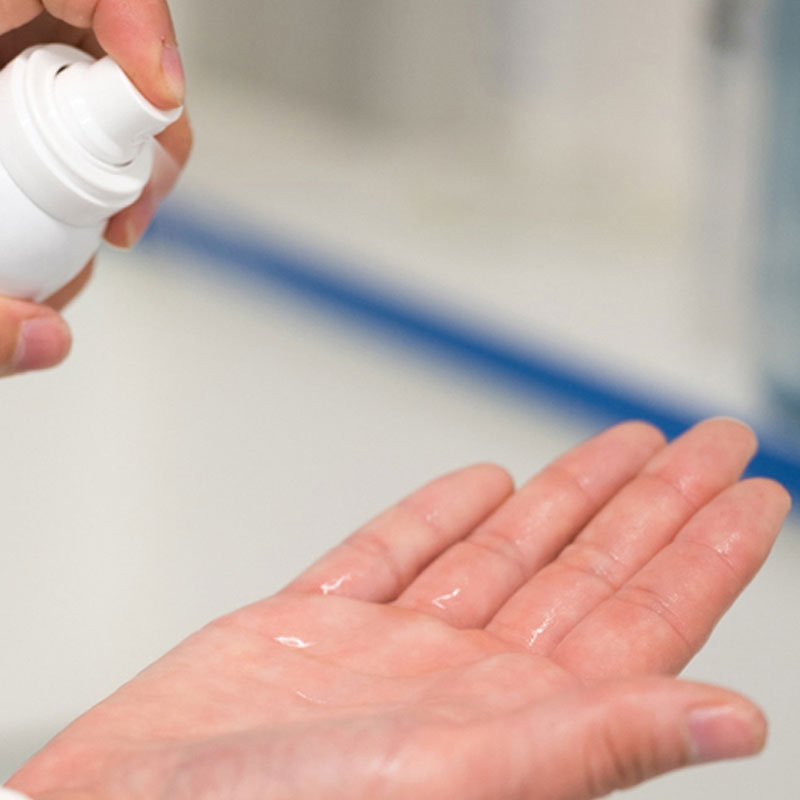

The knowledge acquired during our research work on the mechanisms of the lesions caused by chemical products on soft tissues have allowed us to develop this technological solution for emergency rinsing of chemical splashes.
The European Chemicals Agency (ECHA) has listed more than 75,000 products that are corrosive, irritant or sensitising for the skin, eye or the respiratory tracts. These products are liable to cause serious lesions that may be limited by first-aid use of DIPHOTERINE® solution.
Historically, emergency rinsing with water represented an initial element of crucial progress in decontaminating chemical splashes. Use of water as a first-aid solution has its limits however. Owing to its physical and chemical properties, DIPHOTERINE® solution allows rinsing to be performed more effectively than with water in case of splashing of chemical product.
- DIPHOTERINE® solution is versatile
Its physical and chemical properties make it effective against a wide range of classes of chemical product (acids, alkalis, oxidising agents, reducing agents, alkylating or chelating agents and solvents). DIPHOTERINE® solution is guaranteed free of phosphates.
DIPHOTERINE® solution is liquid: it therefore allows performance of effective mechanical rinsing of the chemical product on the surface of the skin or the eye.
When a splash occurs, the chemical product is deposited on the surface of the tissue. It does not penetrate instantly and completely into the skin or the eye. Some chemical product therefore remains on the surface. Mechanical elimination by rinsing using a liquid solution allows removal of the product from the surface of the tissue.
Consequently, it is no longer capable of reacting with the skin or the eye and of creating a burn. Mechanical rinsing is the major effect of emergency decontamination of splashes of chemical products using DIPHOTERINE® solution.
Irrigation of the contaminated area with a copious amount of liquid DIPHOTERINE® solution also allows dilution of the chemical product. A less concentrated chemical product will be less aggressive to the tissue. This additional physical effect is minor in relation to mechanical rinsing of the chemical product.
DIPHOTERINE® solution will limit penetration of the chemical product inside the tissue.
- The chemical products quickly penetrate into the skin or the eye, creating deep-lying lesions.- DIPHOTERINE® solution is a hypertonic solution: it has an osmotic pressure greater than that of the skin and the eye. This makes it possible to limit penetration of the chemical product inside the tissues. - DIPHOTERINE® solution is able to halt the aggressiveness of the chemical product.
DIPHOTERINE® solution contains an amphoteric and chelating molecule. The chemically reactive sites of this molecule will be capable of reacting with the corrosive or irritant chemical products, thus preventing their reaction with the biological components of the tissues. Owing to this additional property, rinsing allows more rapid return to an acceptable physiological state.