Removes the risk of hypothermia
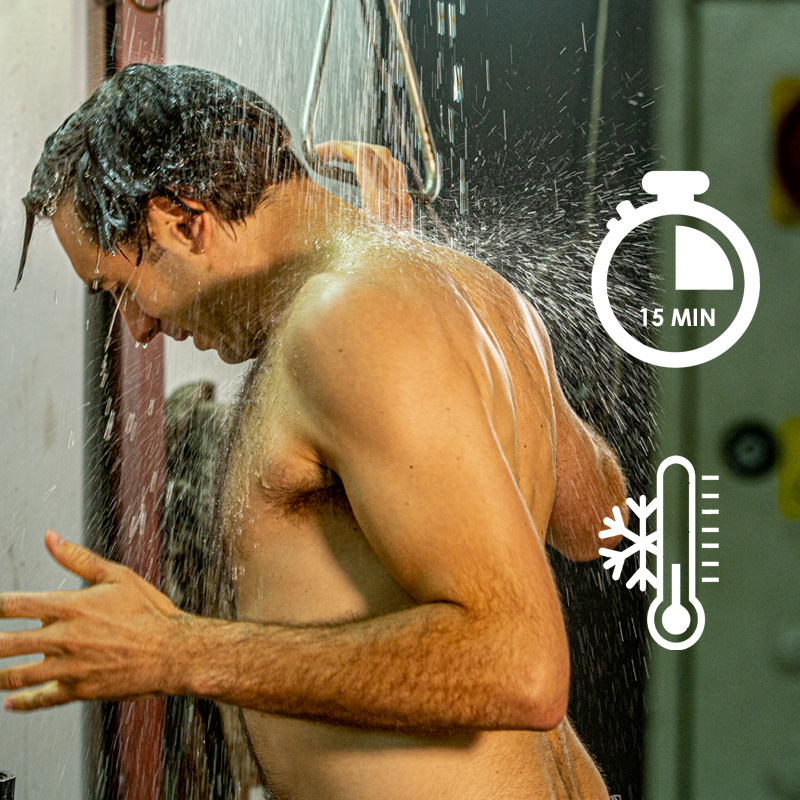
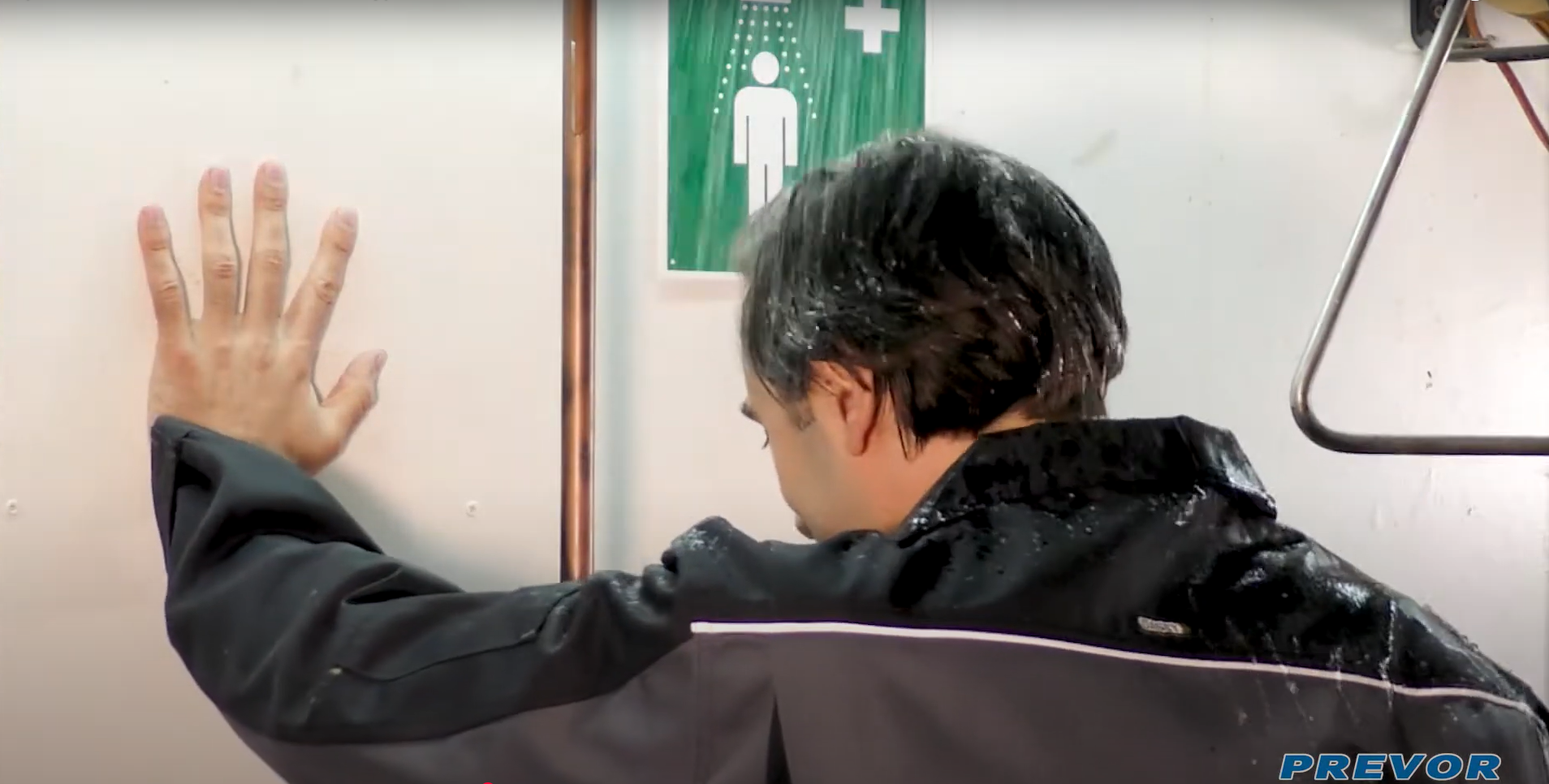
When a chemical accident occurs, some companies only have water showers to rinse the injured worker. However, the temperature is not necessarily ideal and, if there is only cold water available to the worker, this can lead to a risk of hypothermia. Rinsing with water must be carried out for 15 minutes which increases the possibility of hypothermia if there is no hot water on site.
This situation cannot occur with Diphoterine® solution. The small volume required to remove the chemical avoids the risk of hypothermia. With Diphoterine® solution, you can rinse without being concerned about having to stop rinsing because of hypothermia.
This situation cannot occur with Diphoterine® solution. The small volume required to remove the chemical avoids the risk of hypothermia. With Diphoterine® solution, you can rinse without being concerned about having to stop rinsing because of hypothermia.
How does it work?
The physical and chemical properties of Diphoterine® solution allow mobile packaging for rinsing in the event of chemical splash on humans in any situation.
Four characteristics give it its activity on chemical splashes:
- Diphoterine® solution is versatile
- Diphoterine® solution is liquid
- Diphoterine® solution limits the chemical’s penetration
- Diphoterine® solution stops the chemical’s aggressiveness
Mobile solutions
Individual containers
Collective containers
Testimonials

Diphoterine seems faster than water. I also noticed an absence of side effects.
- Lucien Bodson, Anaesthetist

Between the emotional shock and the water temperature, a person can quickly go into hypothermia. Diphoterine® solution, which is an active solution, requires a smaller amount to be effective, which limits the risks mentioned above.
- Mickael Dupont, QSE Manager

It’s difficult for some workers to rinse themselves with water, sometimes the shower water is not clean, and, above all, the temperature is not controlled. Diphoterine solution should be used in these cases
- Parag Kulkarni, doctor in India